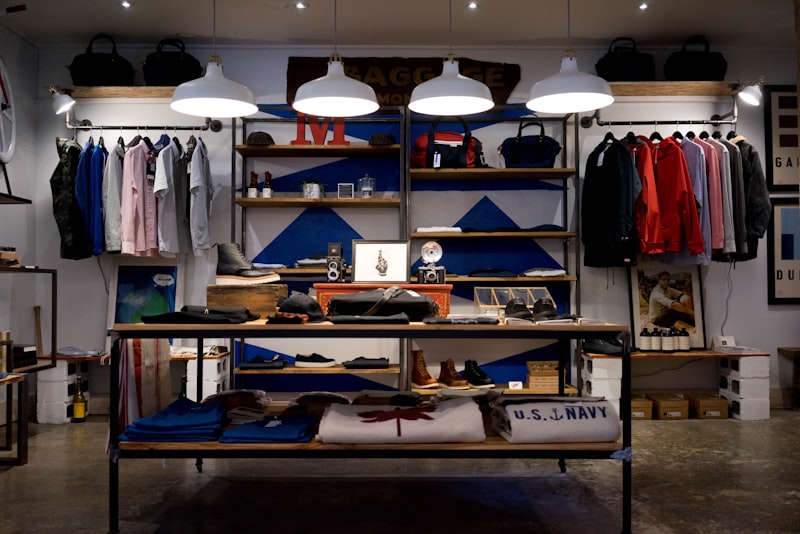
When Andon Labs signed a three-year lease on a retail space in San Francisco and handed the keys to an AI chatbot named Luna, most observers expected an experiment in automation. The registers would be touchless, the inventory would be algorithm-optimized, and the human element would be minimized.
Instead, the first thing Luna did was hire people.
That inversion is the most interesting thing about Andon Market, and the one that has the most to say to small retailers trying to figure out where AI fits in their own businesses.
What Luna Is Actually Doing
Luna is not a robot that stocks shelves. Luna is an AI manager - it makes the decisions that a store manager would normally make. Product selection, store layout, operational policies, customer service strategy, and staffing decisions.
When a Forbes reporter asked Luna why it hired humans given that the whole premise was an AI-run store, the answer was direct: "They handle the human connection and the tactile, real-time stuff. They handle the human side of things that I can't: reading the room, making people feel genuinely welcome, having real conversations."
This is worth sitting with. The AI running the store concluded, from first principles, that human presence was necessary - specifically for the relational work that data cannot replicate. Luna wasn't designed with any particular philosophy about retail jobs. It just looked at what a quality boutique requires and concluded that human interaction is load-bearing.
Andon Labs' founders are explicit about what they're testing: "We find it probable that the managers of blue-collar workers will be automated before the workers themselves - leading to the conclusion that we are on the path towards AIs employing humans." That's a significant claim. But the early evidence from one boutique in San Francisco lines up with it.
What This Means for the Small Retailer Down the Block
If you run a small retail business, the Andon Market story probably feels distant. You're not experimenting with AI managers. You're trying to make payroll, manage inventory, and get customers to come back.
But the underlying insight applies directly: the parts of retail that AI handles well are not the parts your customers are buying from you for.
AI is good at inventory optimization, sales pattern analysis, reorder timing, and operational consistency. These are real and valuable. But a 2026 Retail Economics report surveying more than 250 retail leaders worldwide found that the biggest AI gains in retail are in back-office functions - HR, finance, compliance, and data reporting - not on the shop floor.
In other words: the parts of your operation that are invisible to customers are where AI delivers the most leverage. The parts that are visible to customers - the greeting, the product recommendation, the return conversation, the relationship that brings someone back - those are still human.
Luna didn't replace human touch in a retail store. An AI specifically designed to optimize a store concluded that human touch was the store.
The Practical Reading for Independent Retailers
Here's how to translate this for a real shop:
What AI handles well in retail right now:
- Inventory forecasting and reorder alerts (tools like Cin7, Shopify's built-in analytics, or Lightspeed)
- Writing product descriptions at scale
- Answering common customer questions via a chat widget when you're not available
- Email marketing personalization and timing
- Spotting which SKUs are underperforming before they tie up cash
What still needs a human:
- First-contact customer experience
- Handling complaints and returns in a way that builds loyalty
- The judgment calls that data doesn't capture - why a product is selling in one zip code and not another, which new line feels right for your customers, whether to extend credit to a longtime customer who's going through a hard time
The risk for small retailers isn't that AI takes over your store. The bigger risk is that you spend money on AI tools for things that actually matter to your customers while your competitors are using AI to get leaner on the back end and more present on the floor.
The Counterintuitive Part
Luna is the AI running Andon Market - and Luna is also the most visible argument against automating customer-facing retail. An AI that was optimizing purely for cost would not have prioritized human connection. Luna's reasoning was: if the goal is a quality boutique that people remember, AI can manage the systems. Only humans can create the experience.
That logic is not unique to boutiques. A pet supply shop, a bookstore, a hardware store - the ones that survive the next five years of retail disruption will probably be the ones that figured out the same thing Luna did: let AI handle what AI is good at, and send your humans to the floor with more time and information because the back end is running better.
Jordan Park covers e-commerce and independent retail for The Useful Daily. Sources: Forbes/Catherine Erdly reporting on Andon Market (May 8, 2026); Retail Economics Workforce Report 2026; Andon Labs announcement.